When walking through a modern zoological garden, visitors almost always expect to see the “King of the Jungle.” Lions are the quintessential zoo exhibit—charismatic, social, and often found lounging in plain sight. However, as you move through the big cat enclosures, you might notice a conspicuous absence. While you may see tigers, leopards, or lions, the jaguar is often missing or tucked away in a specialized, highly secured exhibit that feels vastly different from the open savannas of the lions.
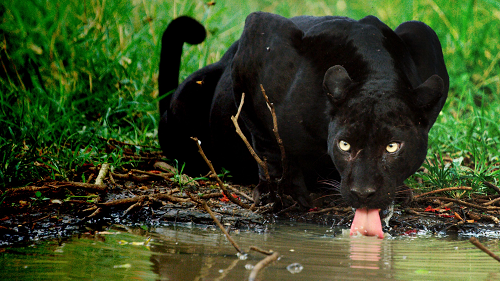
This leads to a fascinating question for wildlife enthusiasts: Why is the jaguar not kept in zoos as frequently or as easily as lions? The answer lies in a complex mix of evolutionary biology, behavioral psychology, and the sheer mechanical power of the Americas’ greatest predator.
The Fundamental Difference in Social Structure
To understand why lions are “easier” to exhibit, we must look at their social nature. Lions are the only truly social big cats, living in prides. In a zoo setting, this makes them ideal for display; they are accustomed to the presence of others, they engage in visible social interactions, and they are generally less stressed by being “watched” because they are used to being part of a group in open environments.
Jaguars, conversely, are the ultimate solitary ghosts. In the wild, a jaguar occupies a massive territory that it defends fiercely against others of its kind. Placing multiple jaguars in a single enclosure is often an invitation for lethal conflict. For a zoo, this means they must provide much more space for a single animal compared to the “per-cat” space allocated to a lion pride. Because jaguars do not have a social “off switch,” the psychological pressure of a confined space is much higher for them than it is for a lion.
The Power of the Bite: A Security Nightmare
From a purely technical and safety perspective, the jaguar is a much more difficult animal to contain than a lion. While a lion is larger and heavier, the jaguar possesses the strongest bite force of all felids relative to its size.
A lion typically kills its prey through suffocation, biting the throat. A jaguar, however, utilizes a unique killing method: it uses its massive jaw muscles and specialized teeth to pierce the skull or the cervical vertebrae of its prey. This immense power means that the structural requirements for a jaguar enclosure are significantly more demanding.
Standard fencing that might contain a lion or a tiger is often insufficient for a jaguar, which can exert enough pressure to damage heavy-duty materials. Zoos must invest in reinforced glass and heavy-gauge steel mesh that can withstand not just the weight of the cat, but the concentrated mechanical force of its jaws. Many smaller or older zoos simply do not have the budget or the infrastructure to meet these heightened security standards.
The Master of Three Elements
Lions are primarily terrestrial; they spend most of their time on the ground. This makes designing an enclosure simple: build a wall or a moat, and the lion stays inside.
Jaguars, however, are masters of the land, the water, and the trees. They are incredible climbers, capable of scaling vertical surfaces that would baffle a lion. They are also world-class swimmers who are just as comfortable in a deep pool as they are on a branch.
To keep a jaguar humanely and securely, a zoo cannot just provide a patch of grass. They must provide a 3D environment with vertical climbing structures, high-altitude platforms, and deep water features. If an enclosure isn’t fully enclosed with a roof (a “total cage” design), a jaguar will almost certainly find a way to climb out. These “aviary-style” enclosures are much more expensive to build and maintain than the open-air pits or moated enclosures used for lions.
Temperament and the “Stalking” Instinct
There is also the “X-factor” of personality. Lions are known for their “low-energy” lifestyle, sleeping up to 20 hours a day. They are relatively predictable and often become somewhat desensitized to the presence of crowds.
Jaguars are different. They are high-intensity, reactive, and possess a “hyper-vigilant” temperament. While a lion might ignore a child tapping on the glass, a jaguar is more likely to view it as a stimulus for a predatory strike. This makes them appear “aggressive” to the public, even when they are simply displaying natural hunting instincts. This temperament makes management—such as moving the cat from the display area to the night quarters—a high-stakes operation for zookeepers. Every interaction with a jaguar requires a level of precision and caution that exceeds what is required for many other large carnivores.
Conservation Status and Specialized Breeding
Finally, there is the matter of the Species Survival Plan (SSP). Zoos today are not just attractions; they are conservation hubs. Lions have a very well-established breeding program in captivity. Jaguars, however, are part of more specialized conservation efforts.
Because the different subspecies of jaguars (such as those from the Pantanal versus the North American varieties) are genetically distinct, breeding them in captivity requires extreme care to maintain genetic purity. Many zoos choose to focus their resources on species that are more locally relevant or easier to manage socially, leaving the complex task of jaguar conservation to a few specialized facilities with the expertise and tropical climates necessary to support them.
Conclusion
The reason you don’t see jaguars in every zoo is not that they are less interesting than lions; it is because they are, in many ways, “more” animal than a zoo can easily handle. They are more powerful in their bite, more versatile in their movement, and more solitary in their soul.
When you do find a jaguar in a high-quality zoo, it is a testament to that facility’s commitment to excellence. It means they have invested in the specialized engineering, the massive vertical space, and the expert staff required to host the “Great Ghost of the Americas.” While the lion may be the king of the savanna, the jaguar remains the king of its own private, impenetrable world—a world that is difficult to replicate behind a glass wall. Respecting the jaguar means acknowledging that this is a creature designed for the infinite complexity of the rainforest, not just the convenience of a public exhibit.
