In the vast hierarchy of the animal kingdom, few creatures command as much respect, awe, and primal fear as the big cats. Belonging primarily to the genus Panthera, these apex predators are the ultimate symbols of power, grace, and evolutionary perfection. From the sun-drenched savannas of Africa to the snow-laden forests of Siberia, big cats have adapted to almost every climate on Earth, carving out roles as the guardians of their respective ecosystems.
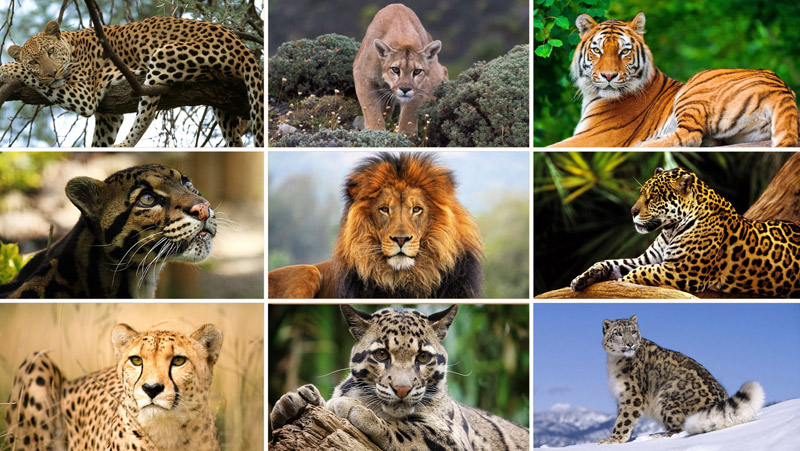
However, the world of big cats is not a monolith. Each species possesses a distinct biological blueprint, social structure, and hunting strategy that separates it from the others. Understanding the nuances between lions, tigers, and their relatives is essential to appreciating the delicate balance of the natural world and the urgent need for their conservation.
The Lion: The Social Monarch of the Savanna
The African lion (Panthera leo) is unique among big cats for one primary reason: it is the only truly social feline. While most big cats are solitary ghosts of the forest, lions live in complex family units known as prides. This social structure is a strategic adaptation to the open landscapes of the savanna, where cooperation is key to bringing down large prey like buffalo, zebras, and wildebeests.
The Dynamics of the Pride
A pride usually consists of related females, their offspring, and a small coalition of males. The division of labor is fascinating; the lionesses are the primary hunters, utilizing sophisticated flanking maneuvers to surround prey. The males, characterized by their iconic manes, serve as the pride’s defenders, protecting the territory from rival coalitions and hyenas.
The Symbolism of the Mane
The mane is more than just an aesthetic feature. Scientists believe that the darkness and thickness of a lion’s mane are indicators of its health and testosterone levels. A darker mane often signals a more formidable opponent, serving as a visual warning to intruders and an attraction for females.
The Tiger: The Solitary Ghost of the Jungle
If the lion is the king of the plains, the tiger (Panthera tigris) is the undisputed emperor of the forest. As the largest of all big cat species, the tiger represents a different evolutionary path—one of absolute solitude and stealth. A Siberian tiger can weigh up to 300 kilograms, yet it can move through dense undergrowth with near-total silence.
Stripes as a Masterclass in Camouflage
A tiger’s stripes are as unique as a human fingerprint. In the dappled light of the jungle or the tall golden grasses of the swamp, these vertical patterns break up the tiger’s silhouette, making it nearly invisible to its prey. Interestingly, the striped pattern is not just on the fur but is also pigmented into the skin itself.
A Love for Water
Unlike most domestic cats and even many other big cats, tigers are exceptional swimmers. They are known to enjoy bathing to cool off in the tropical heat of India and Southeast Asia, and they are capable of crossing wide rivers and even hunting in the water. This semi-aquatic lifestyle allows them to occupy niches that other predators simply cannot.
The Panthera Family: Leopards, Jaguars, and Beyond
While lions and tigers often steal the spotlight, the category of “big cats” includes other formidable predators, each with specialized skills that allow them to survive in harsh environments.
The Leopard: The Master Climber
The leopard (Panthera pardus) is perhaps the most versatile of the big cats. Found across Africa and parts of Asia, its greatest strength is its ability to climb. Leopards are incredibly strong for their size, often dragging heavy carcasses high into trees to protect their meal from scavengers like lions and hyenas. They are the ultimate opportunists, capable of surviving on a diet ranging from beetles to large antelopes.
The Jaguar: The Powerhouse of the Americas
The jaguar (Panthera onca) is the only “Panthera” species found in the Americas. Resembling a leopard but built with a much stockier frame, the jaguar possesses the strongest bite force of all felids relative to its size. Their hunting style is unique; rather than suffocating prey with a throat bite, they often use their powerful jaws to pierce the skulls of their prey, which includes armored reptiles like caimans and turtles.
The Sensory Evolution of Apex Predators
What makes these animals “big cats” is not just their size, but a suite of biological tools designed for the hunt. Their eyes contain a high number of rod cells, providing them with night vision that is six times superior to that of a human. Their retractable claws stay sharp by remaining tucked inside sheaths when they walk, ensuring that their primary weapons are ready for a lethal strike at any moment.
Furthermore, the “big cats” are distinguished by their ability to roar. This is made possible by a specialized, flexible hyoid bone in the throat and a thick pad of fibro-elastic tissue. The roar of a lion or tiger can be heard from miles away, serving as a long-distance communication tool to define territories and attract mates.
The Crisis of Conservation
Despite their power, big cats are currently facing their greatest threat: the expansion of human civilization. Habitat loss, poaching for the illegal wildlife trade, and human-wildlife conflict have driven many species to the brink of extinction.
Tigers, in particular, have seen their populations plummet by over 95% in the last century. Lions have disappeared from 80% of their historical range. Conservation efforts, such as the creation of protected wildlife corridors and anti-poaching units, are the only barriers standing between these majestic creatures and total disappearance. The survival of big cats is a litmus test for the health of our planet’s biodiversity; when the apex predator falls, the entire ecosystem below them begins to collapse.
Conclusion
Lions, tigers, and the other big cats are the living masterpieces of evolution. They embody the raw beauty and untamed spirit of the natural world. Whether it is the cooperative strength of a lion pride, the solitary stealth of a tiger, or the arboreal agility of a leopard, these animals remind us of the complexity and wonder of life on Earth.
To protect them is not merely an act of charity; it is a duty to ensure that the “roar” of the wild continues to echo for generations to come. By respecting their territories and supporting global conservation initiatives, we can ensure that these sovereigns of the wild continue to reign in the shadows and sunshine of the world’s most beautiful landscapes. The loss of the big cats would not just be a biological tragedy—it would be a loss of the very soul of the wilderness.
